Dealership Info
send us a message
read our FAQ’s
Natural gas (NG) is a fossil fuel derived from the remains of ancient plants and animals. It forms when layers of decaying organic material are exposed to severe heat and pressure beneath the Earth’s surface over millions of years. This non-renewable hydrocarbon is colourless, odourless and non-toxic, serving as a source of energy for heating, cooking and electricity generation. NG can also be used as fuel in some cars and also as a chemical feedstock in the production of plastics and other significant organic chemicals.
Natural gas exists in two states: gaseous (compressed natural gas) and liquid (liquefied natural gas). To facilitate transport, natural gas is cooled to a liquid state at temperatures between -120 degrees Celsius and -165 degrees Celsius. Compressed natural gas is kept at pressures of 200 to 250 bars. While natural gas is suitable for all vehicles, liquefied natural gas is preferred for long-haul vehicles and extended travel distances.
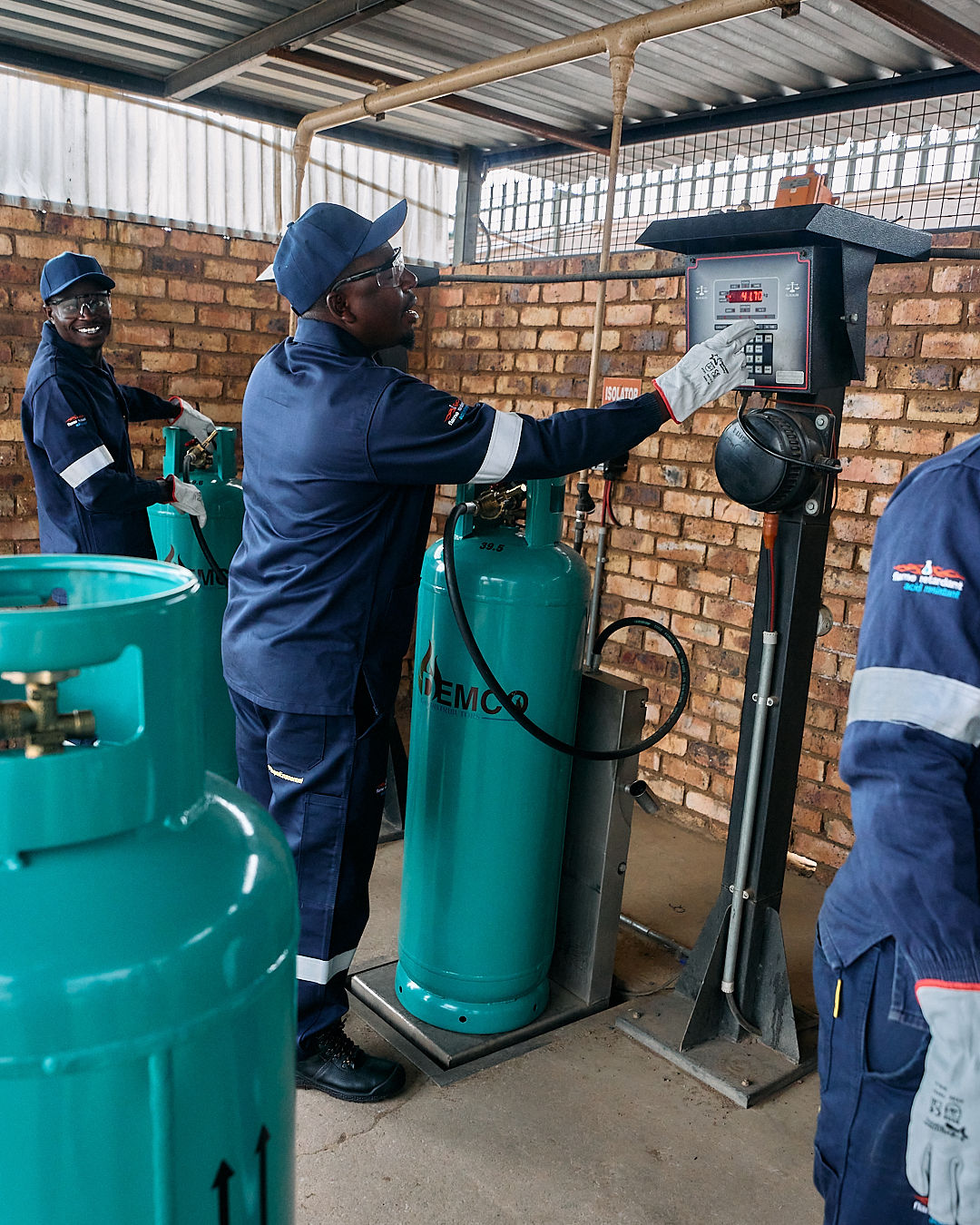
LP Gas is a highly efficient, colourless and highly flammable fuel which is primarily made from propane and butane. It is produced through refining crude oil or the extraction of natural gas and it is kept in pressurised tanks in liquid form but converts to gas when required. LPG is considered as the clean energy for a variety of applications which include cooking, heating and as fuel in cars. This gas is commonly viewed as a significantly cleaner-burning alternative to other hydrocarbons due to its reduced emissions.
In comparison to Natural Gas, LP Gas offers a higher energy content, which allows for less fuel usage to produce an equivalent amount of heat. It should be handled cautiously because of its flammable nature and an added odorant aids in the detection of leaks. Mishandling or extended exposure can lead to frostbite, burns and various health concerns.